



 International STEM Standards



 Oluchi Nwachukwu, M.Ed


 Emmanuel Nwachukwu
Somewhere in Lagos, a five-year-old is watching a plane cross the sky above his city and wondering how it works. Somewhere in London, a seven-year-old girl of Ghanaian heritage is fascinated by machines but has never seen an African child on the cover of a science book. Somewhere in Atlanta, a Nigerian-American boy loves building things — but doesn't yet know that engineering is for someone like him.
These children are separated by thousands of miles. They are connected by a single, urgent need: to see themselves in science.

The Global Deficit: Where Are the African STEM Heroes?
Walk into a school library in Lagos, London, or Toronto and search for children's STEM books featuring African heroes. The options are vanishingly rare. The world of children's science publishing has, for decades, been built around a particular kind of character — and that character does not reflect the experiences, faces, or stories of African children or the global African diaspora.
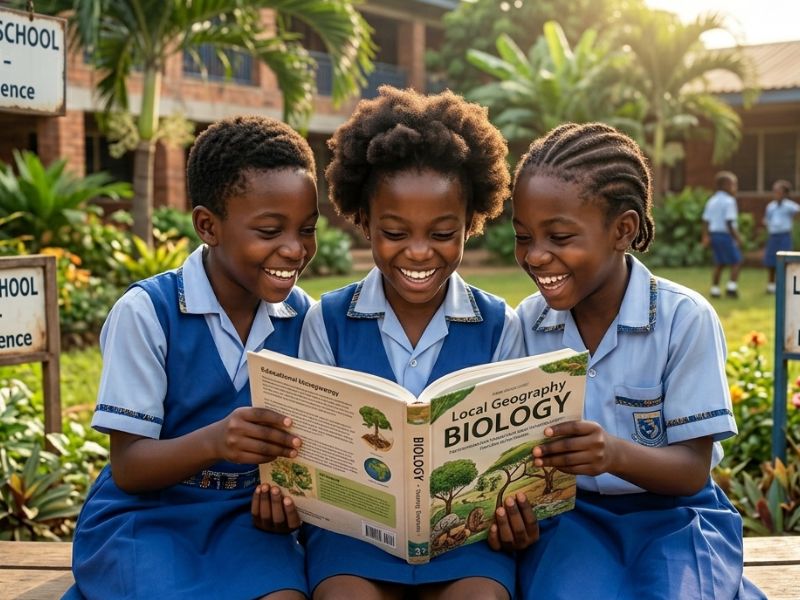
This matters far beyond aesthetics. Research in educational psychology consistently demonstrates that representation in learning materials directly impacts academic self-concept — a child's deeply held belief about whether they belong in a subject area, and whether success there is possible for someone like them.
When African children are shown STEM as something other people do, in other places, with other faces, the message absorbed — even unconsciously — is that STEM is not theirs. This effect is amplified in diaspora contexts, where children of African heritage are simultaneously navigating questions of identity, belonging, and cultural pride while also being expected to excel in science and mathematics.
What the Research Tells Us
The framework of Culturally Relevant Pedagogy, developed by educational scholar Dr. Gloria Ladson-Billings, argues that learning is most powerful when it connects to a child's cultural experience, identity, and community. Applied to STEM education for African children — whether they live in Accra, Abuja, Birmingham, or Baltimore — this means several things:
- Stories set in recognisable African places activate prior knowledge, lower cognitive barriers to new science concepts, and signal that the child's world is worthy of scientific attention.
- Heroes who share the child's heritage build what psychologists call academic identity — the child's internal sense of themselves as a capable, legitimate participant in STEM.
- Science problems rooted in African realities make abstract concepts tangible, urgent, and personally meaningful.
- Social-Emotional Learning woven through narrative gives children the courage to persist through difficulty — arguably the most critical STEM skill of all.

The Diaspora Dimension: A Need Too Long Ignored
There are an estimated 40 million people of African heritage living outside the African continent. In the United Kingdom alone, the Black African community numbers over 1.5 million. In the United States, over 4 million people identify as Black African. In Canada, Australia, France, and across Europe, communities of African heritage are raising children who straddle identities — proudly African, proudly British or American or Canadian, and looking for books that hold both truths at once.
For these children, a STEM book featuring an African hero is not merely educational. It is affirming. It says: your heritage is not a barrier to science. Your story belongs in the world of engineering and aviation and technology. Your Africa is a place from which great things take flight.
Why We Created Kamsi — and Who He's For
Our son Kamsi was four years old when we began writing. He was obsessed with aeroplanes — the way only young children can be obsessed. And every aviation book we found for him featured a world he could not recognise. So we built what did not exist.
Kamsi's Incredible Flight: The Secret of the Wings is a STEM and SEL picture book for children ages 4–8. It follows a young African boy who dreams of becoming a pilot — set against the rich visual world of an African city. Through his adventure, children across Africa and the diaspora learn the real science of aerodynamics: how wings generate lift, why thrust overcomes drag, what keeps tonnes of metal suspended in the sky.
But Kamsi is not just a Nigerian story. He is an African story. He is a story for every child of African heritage, wherever they were born, wherever they are growing up. His courage belongs to every child who has ever looked up at a plane and wondered: could that be me?
The SEL Dimension: Science Needs Emotional Courage
At Kadosh Africa, we are deliberate about integrating STEM with Social-Emotional Learning in every product we create. The CASEL framework identifies five core competencies that underpin both personal wellbeing and academic success: self-awareness, self-management, social awareness, relationship skills, and responsible decision-making.
STEM without SEL produces technically literate but emotionally fragile learners. Kamsi's books cultivate both — simultaneously, naturally, through the power of story.

The Bigger Picture: Africa's STEM Future Is a Global Priority
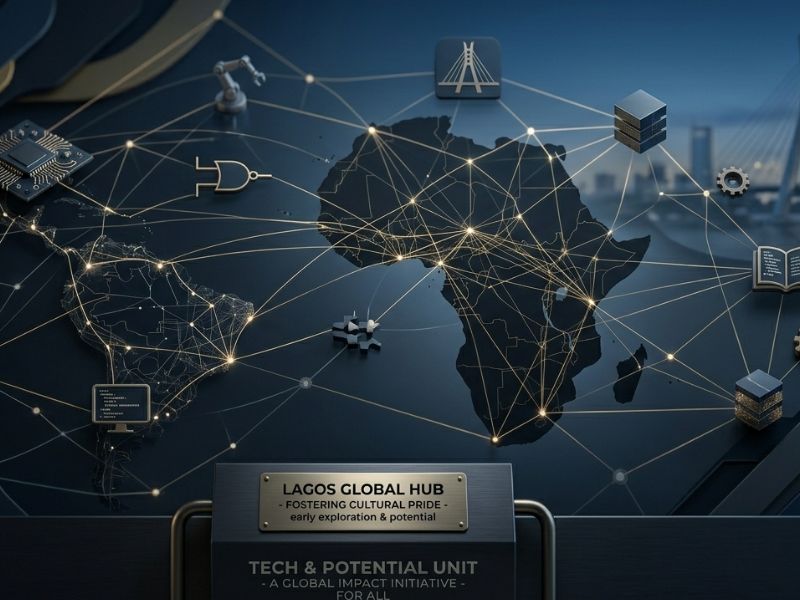
Africa is home to the youngest population on earth. By 2050, one in four people alive will be African. The continent's capacity to develop, deploy, and lead STEM innovation will determine not just Africa's economic future — but the planet's ability to solve its most urgent challenges: climate, food security, health, energy, and urban development.
At Kadosh Africa, we believe that representation in STEM is the first technology. Before the code. Before the circuit. Before the experiment. Before any of it — a child must believe that science is for them. That is what Kamsi gives every African child, everywhere.
Give your child their Kamsi moment.
Kamsi's Incredible Flight is on Amazon now. Suitable for every African child, wherever they are in the world. Ages 4–8.


